

All Resources
 Share
Share
2026 Forecast : Three Economic Boosts Small Business Owners Can Expect
Small business owners can look to 2026 with renewed optimism as falling interest rates, stabilizing tariffs, and expanding AI adoption create a more favorable landscape for growth.
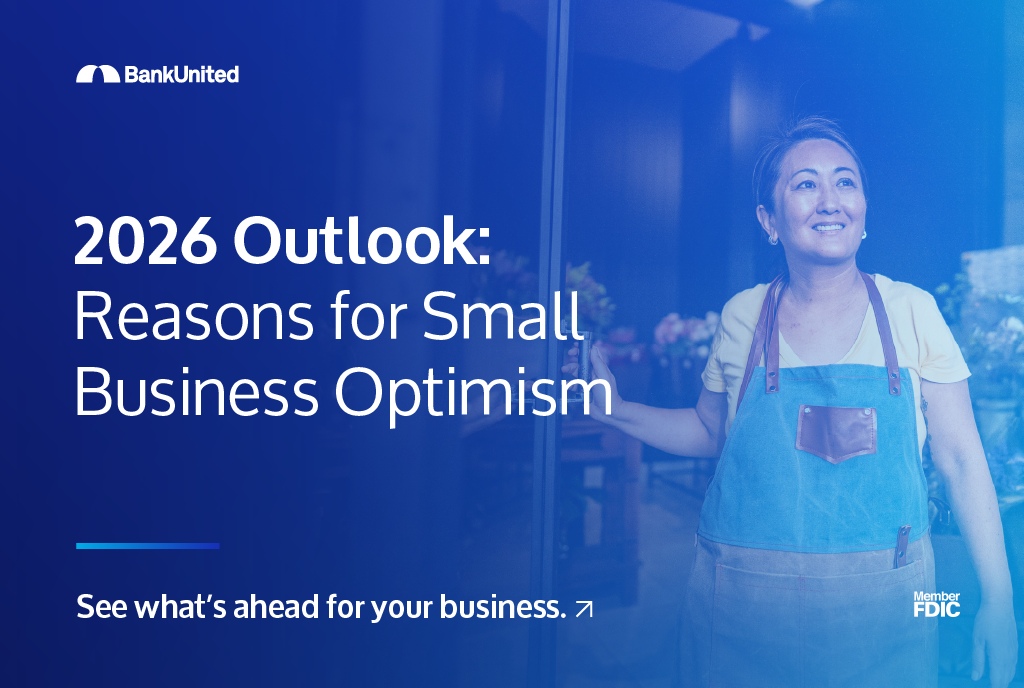
Small business owners are among the most creative and adaptable people around—and that's proved beneficial as they've navigated the unpredictable economy of the past few years. From tariffs and technology to inflation and labor shortages, small businesses have had to evolve and adapt to the volatile business environment.
As we enter a new year, many of the challenges remain the same. Yet small businesses are increasingly optimistic, drawing on lessons learned in hopes of greater success. For example, the U.S. Chamber of Commerce Small Business Index reached an all-time high in the third quarter of 2025.1 This is due to multiple factors, including small business owners' growing optimism about the national economy and their comfort with their company's cash flow.2
With business owners anticipating growth in the new year, here are a few economic bright spots to watch.
The Fed is expected to cut interest rates again
Most small business loans are sensitive to overall interest rates, and 2026 may offer some good news. Economists and Federal Reserve watchdogs are predicting additional cuts to the federal funds borrowing rate this year, with the rate ultimately hovering around 3%.3 Most of these rate cuts should occur in the first half of the year, though whether they materialize depends on a host of economic factors. That said, for small business owners, falling interest rates mean access to more affordable capital.
Business owners who've delayed expansions or capital improvement projects may find new opportunities for growth in a lower-rate environment. A real estate purchase or equipment upgrade that wasn't feasible may become a reality. Even as rates decrease, it's important to explore all capital options, including government-backed loans and other flexible solutions designed to support small business needs while offering easier qualifications and quicker approval processes.
Beyond capital improvements, business owners can also take advantage of declining interest rates to boost liquidity through lines of credit. A BankUnited business banker can help determine what loan and credit solutions make sense for your business.
U.S. tariff policy begins to stabilize
New and evolving tariff policy roiled small businesses last year, as companies struggled to keep pace with the changes and understand how the fees would affect their businesses. More than two-thirds of small business owners reported that tariffs have impacted their company in the past year, primarily via higher costs for goods and materials, delays in inventory and fulfillment, and supplier changes or losses.4
While the tariff impacts will continue to play out over the next year, the initial volatility does seem to have stabilized. That enables companies that were previously stalled in their planning and forecasting to move ahead with a better understanding of what the trade policy will be and how to account for tariffs within their own supply chain. For some organizations, the result may mean raising prices on customers, while others may opt to absorb increased costs or offset them with savings in other parts of their operations.
AI will help small businesses navigate future challenges
If tariffs dominated a good portion of headlines last year, then AI news filled in much of the rest. AI has rapidly moved from an aspirational or conceptual goal for many small businesses to a tool that's part of daily business. In fact, 58% of small businesses report they used generative AI in 2025, up from 40% the year before, according to the U.S. Chamber of Commerce.5 In addition, 80% of small business owners say that the technology helped them better cope with inflation, supply chain disruption, and even access to capital.6
Looking ahead, 96% of small business owners say they expect to adopt more emerging technologies, including AI, in the coming year.7 For small businesses, AI applications can help streamline or automate previously tedious or manual processes, accelerate business activities, and increase the productivity of existing staff. And dedicating resources to AI investments will likely help small businesses become more competitive with their larger counterparts.
A future of growth
The tenacity of small businesses is inspiring, and that persistence stands to pay off in 2026. Consider that 74% of small businesses plan to grow their revenue in the coming year.8 Accessible, affordable capital, stabilized tariff policy, and technology that improves productivity will all provide an assist. Working with a trusted banking partner can ensure that small businesses tap into the right financial tools at the right time, capitalizing on momentum to build a stronger future.
Learn how BankUnited can help your business go for more. Check out our business lending solutions or contact us directly, and a Business Banker will be in touch with you shortly.
Sources
- https://www.uschamber.com/sbindex/summary
- https://www.uschamber.com/sbindex/summary
- https://www.forbes.com/sites/simonmoore/2025/11/29/what-to-expect-for-interest-rates-in-2026/
- https://www.revenued.com/tariff-impact-small-businesses#a_growing_threat_to_margins
- https://www.uschamber.com/technology/empowering-small-business-the-impact-of-technology-on-u-s-small-business
- https://www.uschamber.com/technology/empowering-small-business-the-impact-of-technology-on-u-s-small-business
- https://www.uschamber.com/technology/empowering-small-business-the-impact-of-technology-on-u-s-small-business
- https://thefinancialbrand.com/news/business-banking/small-businesses-remain-resilient-but-need-help-on-cost-control-digital-transformation-and-succession-planning-193986
Not a commitment to lend. SBA loan programs are subject to eligibility requirements, underwriting, and applicable SBA guidelines.
Share
 Print
Print
SUGGESTED ARTICLES
All content is for informational purposes only and does not constitute legal, tax, or accounting advice. You should consult your legal and tax or accounting advisors before making any financial decisions.