

Resource Corner
How to Create a Savings Goal and Actually Reach It
Saving for a goal is easier to manage when you know exactly what you are working toward. Check out these 4 steps to get started.

Key Takeaways
- A specific savings goal gives you a clear target and timeline instead of simply trying to “save more.”
- Breaking a larger goal into smaller monthly or weekly amounts can make it easier to see what it will take to reach it.
- The type of account you choose should reflect how soon you will need the money and how much access you want along the way.
- Automatic transfers can make saving more consistent and easier to manage over time.
Saving for a goal is easier to manage when you know exactly what you are working toward. A specific goal gives the money a purpose, a target amount, and a timeline. A goal such as “save more this year” does not provide much direction. Without a target amount, a deadline, or a clear purpose, it is easy for other expenses to take priority. A specific savings goal changes that, and a clear plan can make the goal feel far more manageable than an open-ended intention to save. Here are four steps to help you get started.
Step One: Name the Goal
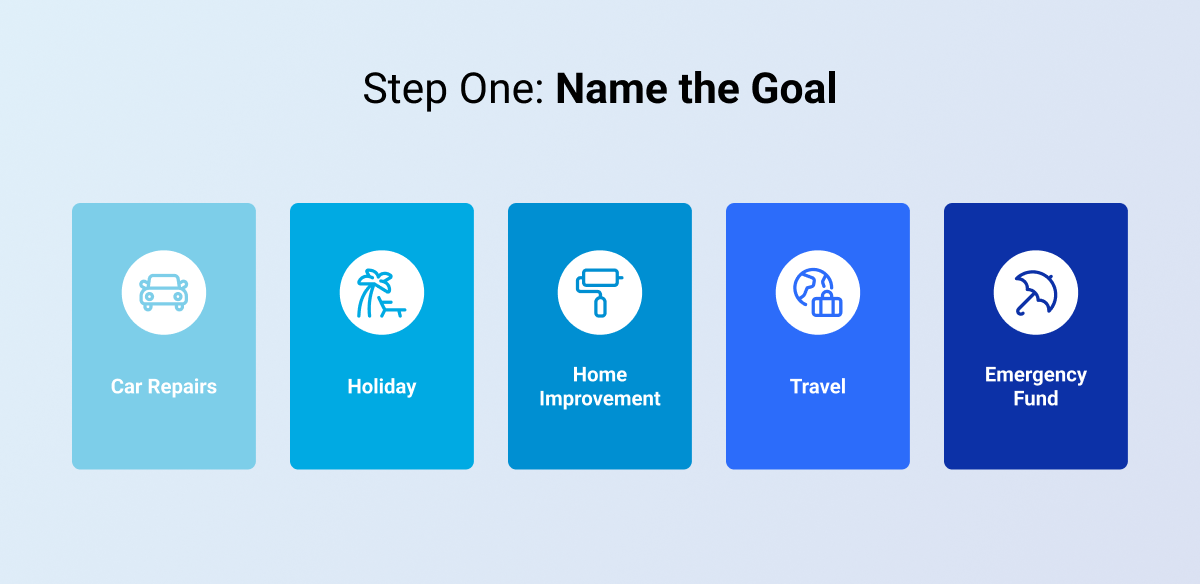
Start by deciding exactly what you are saving for. Instead of setting a general goal to save more, give the money a purpose and a deadline. For example, “Save $600 for car repairs by December” tells you what the money is for, how much you need, and when you want to have it available.
Your goal might involve holiday expenses, a vehicle purchase, home improvements, travel, or an emergency fund. If you are working toward several goals at once, consider which ones need attention first. An expense you expect within the next several months may take priority over something you would like to purchase a few years from now.
Step Two: Calculate the Target
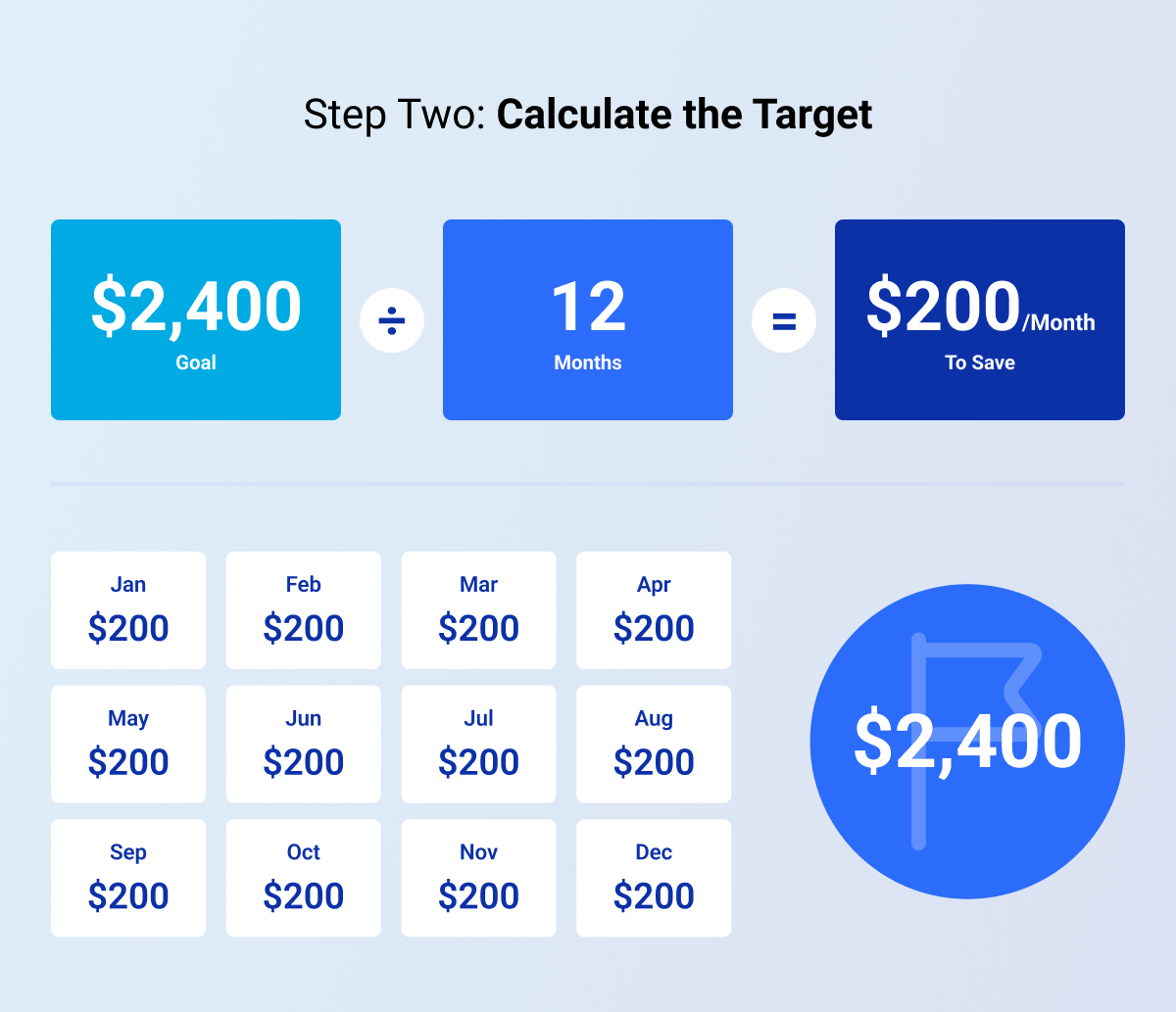
Break the total amount into smaller pieces based on your timeline. If you want to save $2,400 for a vacation one year from now, that works out to $200 per month. If you are paid every two weeks or prefer to budget weekly, you can divide the goal that way instead.
Looking at the goal in smaller increments can also help you decide whether the timeline is realistic. If $200 per month does not fit comfortably into your budget, you might give yourself more time, lower the amount you plan to spend, or find expenses that can be reduced for a while.
Step Three: Match the Account to the Timeline
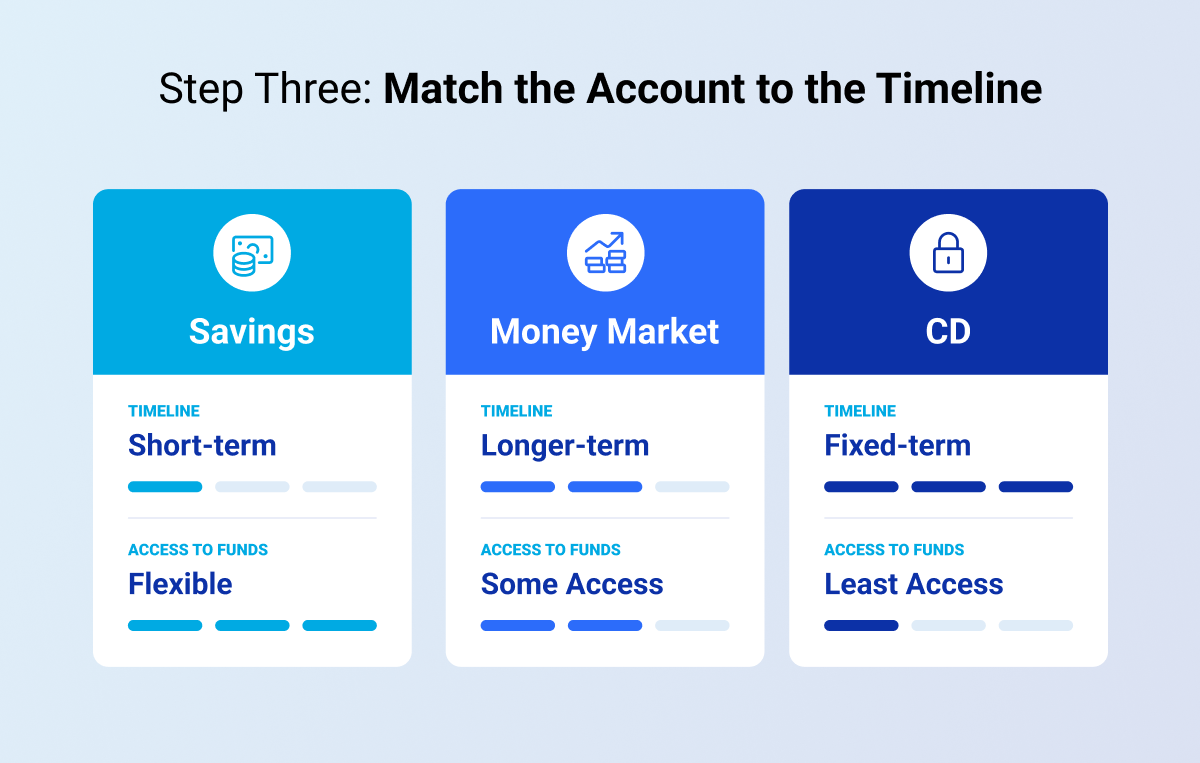
Where you keep the money should fit the way you plan to use it. For short-term savings goals, access often matters more than anything else. A savings account keeps money separate from everyday spending while still making it available when needed.
A money market account is worth considering if you want to earn interest while keeping your savings accessible. These accounts can offer access to funds along with the opportunity to earn interest, depending on the account terms. If you know roughly when you will need the money and can leave it untouched for a set period, a certificate of deposit account may be the better fit. Certificate of deposit accounts generally offer a fixed rate for the term, and because early withdrawals can carry a penalty, the term should line up closely with your expected timeline.
BankUnited offers savings, money market, and certificate of deposit account options that can support a range of savings goals. For longer-term goals, such as retirement, it may also be appropriate to consider options beyond a bank deposit account. A financial advisor can help you evaluate those choices based on your timeline, overall financial situation, and tolerance for risk. Our article, “Are You Keeping Too Much Money in Your Savings Account?” offers additional perspective on how much money to keep readily available and when other options may be worth considering.
Step Four: Automate and Track Your Progress
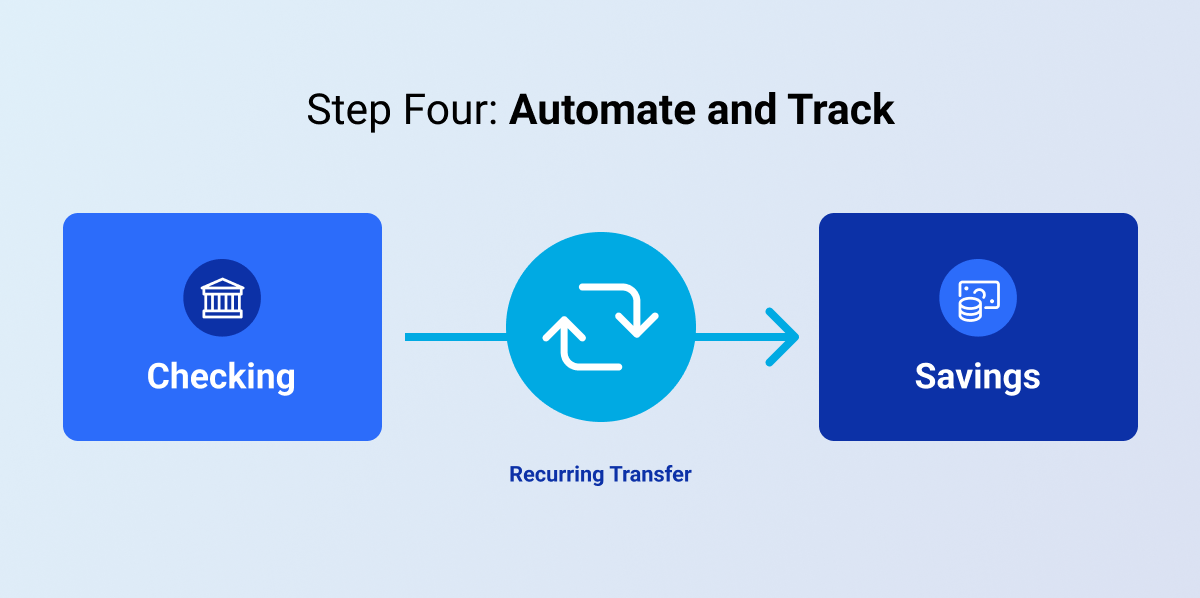
Once you know how much you want to save, consider setting up recurring transfers to make contributions more consistent. If your target is $200 per month, you could transfer the full amount once a month or schedule smaller transfers that line up with your paydays.
Automation can remove some of the day-to-day effort from saving, but your plan should still be flexible enough to change with your circumstances. Review your progress periodically, especially when your income, expenses, or priorities change, and adjust the amount you are saving or the timeline for reaching your goal if needed.
Give Your Savings Goal a Real Plan
A savings goal is more useful when it reflects what you can realistically set aside and when you expect to need the money. A clear plan can make steady progress easier to maintain without relying on willpower alone.
Ready to put your goal into motion? Open a BankUnited savings, money market, or certificate of deposit account online today and start working toward what matters to you.
 Share
 Print
SUGGESTED ARTICLES
All content is for informational purposes only and does not constitute legal, tax, or accounting advice. You should consult your legal and tax or accounting advisors before making any financial decisions. Outcomes may vary based on individual circumstances, financial condition, and market factors. Client stories or testimonials are not a guarantee, promise, or indication of future results.