

Resource Corner
 Share
Your Next Business: Buy or Start From Scratch? Take the Quiz
Buying an existing business and starting one from scratch reward different strengths, not just different budgets. Take the short quiz below to see what applies to your situation.

Key Takeaways
- Buying an existing business and starting one from scratch reward different strengths, not just different budgets.
- Take the short quiz below before reading further. Your results point you to the section that applies to your situation.
- If buying a business fits you, the business's financials, customer base and staff matter as much as the price itself.
- If starting a business fits you, expect it to take longer before the business earns enough to support you, and plan on financing it differently than you would an acquisition.
Business ownership can be rewarding, both financially and professionally, but there is more than one way to get there. Are you better positioned to buy an existing business or start one from scratch? The two paths ask very different things of the person doing them, from how much risk you are comfortable with to how you plan to finance it. Take the short quiz below to find out which path fits you. Your results will then point you to the section that walks through what that path looks like, whether that means evaluating a business you are considering buying or preparing to launch one of your own.
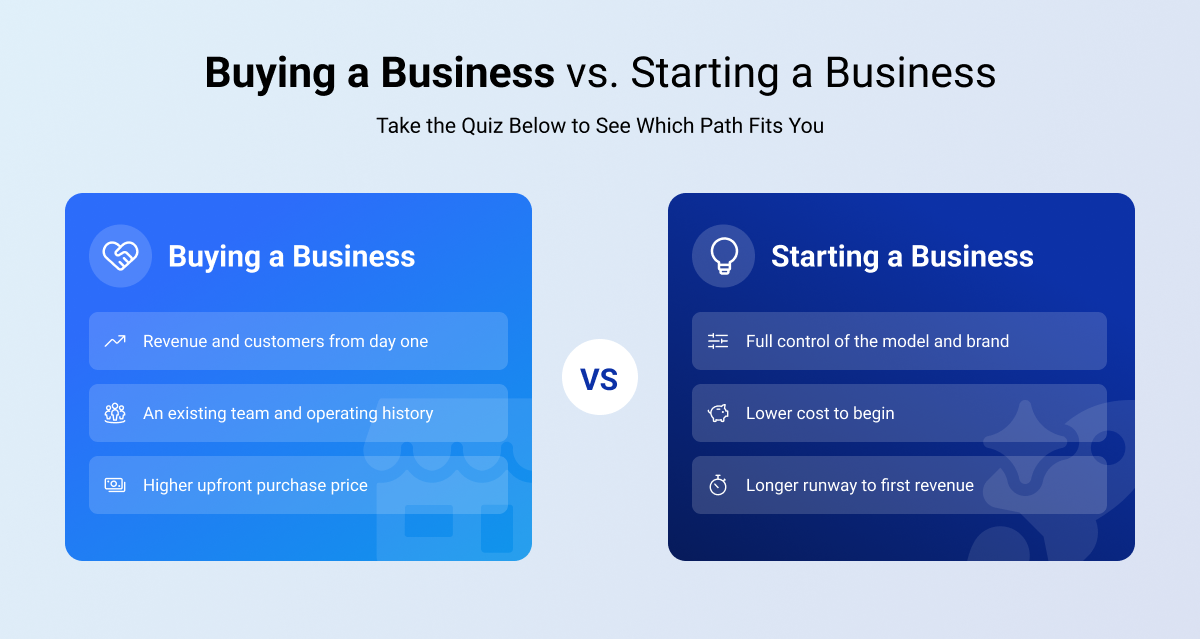
Take the Quiz: Which Path Fits You?
For each pair below, choose whichever answer sounds more like you. Then add up how many As and Bs you picked, and read the section that matches your results.
1. When you picture running the business, which sounds more like you?
A) You want to take something that already works and make it better.
B) You want to build your own systems and processes from day one.
2. Which is closer to how you would like to operate a business?
A) You would rather run a proven playbook well than invent something new.
B) You have spotted a gap in the market and want to build something to fill it.
3. How soon do you need the business to support you financially?
A) Right away. You need the business to generate income soon after taking over.
B) You are willing to wait longer for the business to earn enough to support you.
4. How do you feel about putting your own assets on the line?
A) You have funds for a down payment and are comfortable pledging personal assets if a lender asks.
B) You would rather grow gradually using personal savings and reinvested profit.
5. Which risk would you rather take on?
A) Inheriting problems in someone else's business, even ones you could not see going in.
B) Betting on whether your own product or service meets the market's needs.
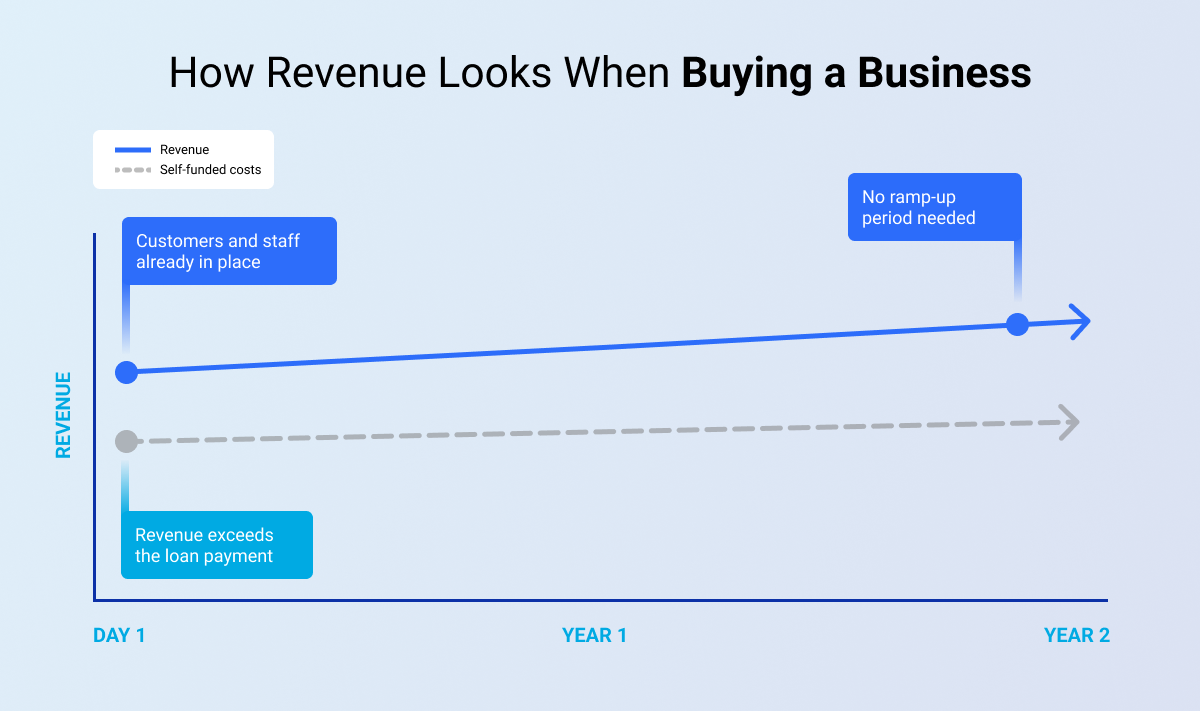
Mostly As? Buying an Existing Business Likely Fits You
Acquisition tends to suit someone who wants to run and improve something that already works. Consider a well-established local business, a dry cleaner, a landscaping company, a small manufacturer, something with a decade of history behind it. Before committing to the idea, a closer look at a few key details reveals most of what matters.
Start with why the business is for sale. Retirement and a desire for a new opportunity are common, reasonable answers. A seller who gives an inconsistent or evasive answer is providing useful information as well, even if not directly.
From there, ask to see three years of financial statements and tax returns, not just the most recent one. A business with steady or growing profit is a very different story than one with a single good year propping up an otherwise declining trend. Pay attention to how much of that revenue comes from a small handful of customers, too. A landscaping company that does half its business for one property management group is riskier than one with a broad base of individual homeowners, even if the total numbers look identical on paper.
The financing side matters just as much as the business itself. Most acquisition loans expect you to personally guarantee the debt, meaning your own assets are on the line, and to contribute a meaningful amount of your own money toward the purchase, commonly around 10 percent, from savings or an approved source rather than borrowed funds. A loan backed by the U.S. Small Business Administration (SBA), such as the SBA 7(a) Loan or, for a deal that includes real estate or equipment, the SBA 504 Loan, usually asks for less equity than a conventional loan would. A larger transaction may call for a Commercial Term Loan or Commercial Line of Credit instead.
BankUnited supports business owners at every stage of an acquisition. That is why BankUnited developed the guide, From Planning to Ownership, available in the Resource Corner, which walks through the full due diligence checklist and business plan framework a lender will expect to see. A BankUnited Business Banking specialist can also talk through a specific deal with you before you make an offer.
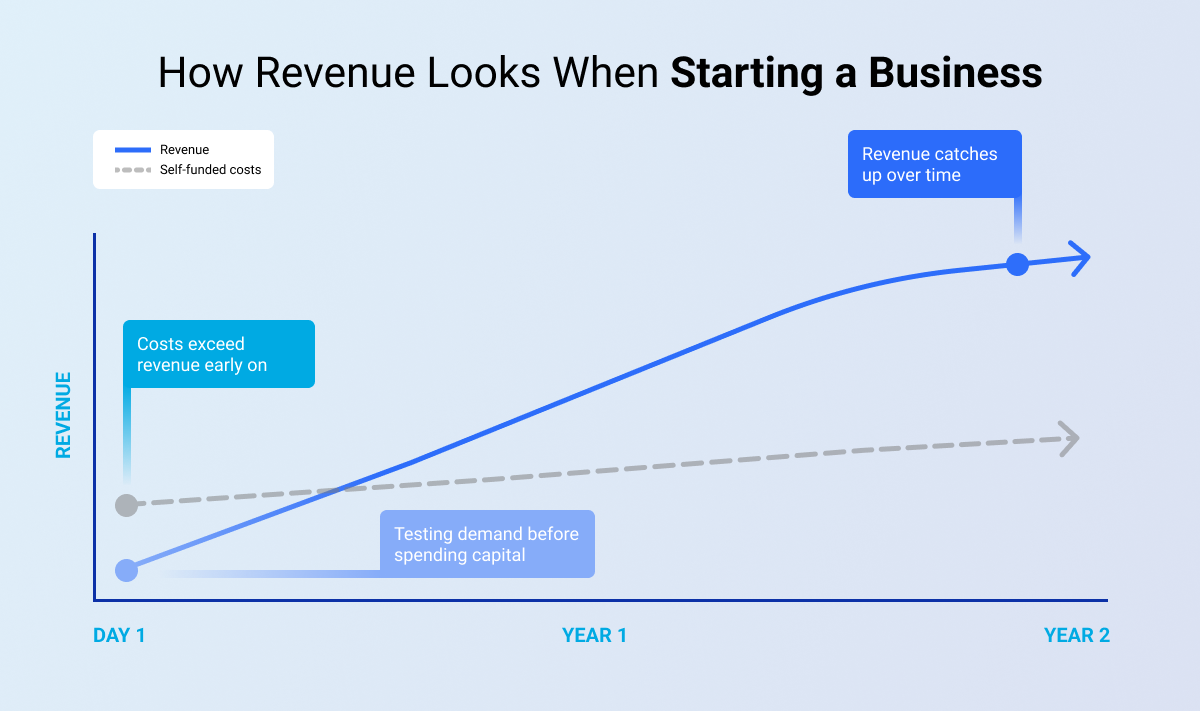
Mostly Bs? Starting a Business from Scratch May Suit You Better
Building something of your own tends to suit someone who has spotted a gap in the market and wants the freedom to shape it from day one. The trade-off is time, since a new business has to earn its own customers, reputation and cash flow from nothing rather than inheriting them from a previous owner.
That gap in the market is worth testing before committing serious capital to it. A pop-up, a farmers market stand, a smaller pilot version of the idea, or simply talking to enough potential customers can reveal more about real demand than research alone. A written business plan still matters here as much as it does for an acquisition. A clear picture of the target customer, the competitive landscape and a realistic budget for the first year or two helps turn an idea into something concrete, both for a lender and for the business owner deciding whether to move forward.
Financing also looks different than it does for an acquisition. A new business has no financial track record yet, so a lender has nothing to rely on the way an existing business's history would provide. Rather than a large loan tied to a purchase price, it is generally funded through personal savings, a smaller working capital line, and reinvested early profit. A BankUnited Business Checking Account and the PRONTO Line of Credit and Term Loan can support the practical side of getting started, though the more important question at this stage is still whether the underlying idea has real demand behind it.
Before committing to either path, it is worth reading BankUnited's white paper, Ready to Own a Business?, available in the Resource Corner, which looks at the data behind both routes in more depth, even for a reader leaning toward building something of their own.
Close to a 3-2 Split? Both Paths Could Work
A close split usually means the decision comes down to financing and timing more than personal fit. A BankUnited Business Banking specialist can help you think through both paths before you commit to either one.
Talk to a Specialist Before You Decide
Whichever path fits you, a conversation with a BankUnited Business Banking specialist is a good next step before you make an offer or sign a lease. To learn more, contact a BankUnited Business Banking specialist or visit bankunited.com.
This article is for informational purposes only and does not constitute financial, tax or legal advice. The self-scoring quiz above is a general self-assessment tool and does not constitute personalized financial advice or a guaranteed outcome. All loans are subject to credit approval. Member FDIC.
Share
 Print
SUGGESTED ARTICLES
All content is for informational purposes only and does not constitute legal, tax, or accounting advice. You should consult your legal and tax or accounting advisors before making any financial decisions. Outcomes may vary based on individual circumstances, financial condition, and market factors. Client stories or testimonials are not a guarantee, promise, or indication of future results.