

Resource Corner
 Share
Share
Navigating the Rise of AI-Generated Phishing Attacks
One of the most common and rapidly evolving threats is phishing. Learn how to protect you and your business against phishing attacks.
At BankUnited, our relationships with clients are built on trust and personalized service. As digital banking continues to grow, the risks are evolving as well. We are committed to protecting your financial information and identity, and we encourage you to stay informed and vigilant.
One of the most common and rapidly evolving threats is phishing. What was once easy to spot has become far more sophisticated and widespread. Today, it is part of a global, multi-billion dollar problem, with cybercriminals increasingly using advanced technologies such as artificial intelligence to make their attacks more convincing.
The Reality: Why Vigilance is Essential
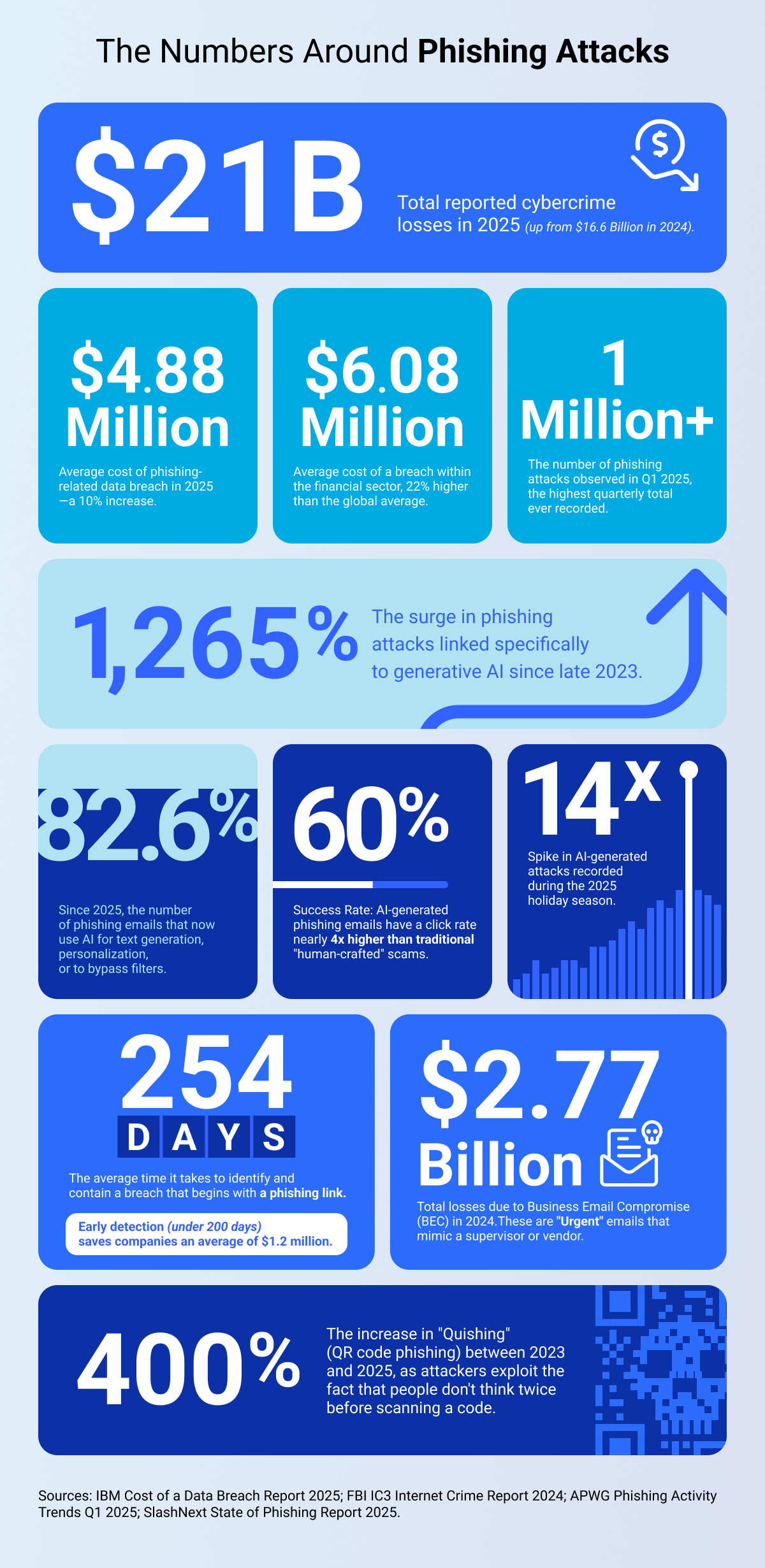
Cybersecurity is a critical pillar of your financial well-being. The data from the past year highlights why constant awareness is your best defense:
- The Global Impact: Total reported cybercrime losses reached $21 billion in 2025.
- The Financial Sector: Attacks on financial institutions remain the most frequent and costly, with the average breach cost rising to $6.08 million.
- The AI Surge: Phishing attacks utilizing generative AI have increased by over 1,200% since late 2023.
The Evolution: Scams Without the Typos
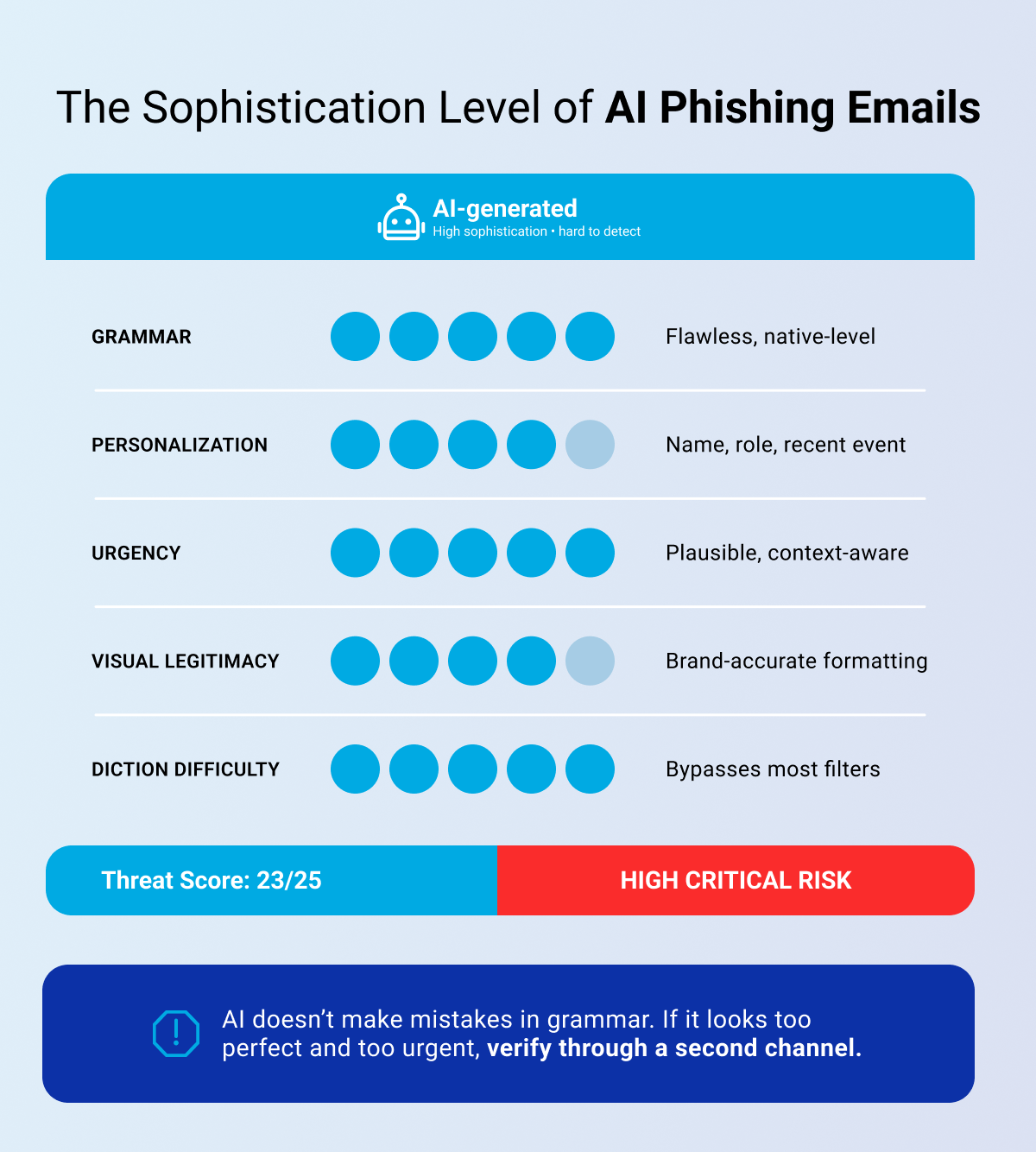
In the past, spotting a scam was easier because of broken English or obvious spelling errors. Today, AI allows fraudsters to generate perfectly written, highly personalized messages that look exactly like legitimate communication from a colleague or a trusted institution.
A Quick Security Reminder: BankUnited will never send you an unsolicited email or text asking for your account number, password, PIN, or Social Security number. If a message creates an intense sense of urgency to provide this info, it is a red flag.
The Fuel for the Fire: Your Social Footprint
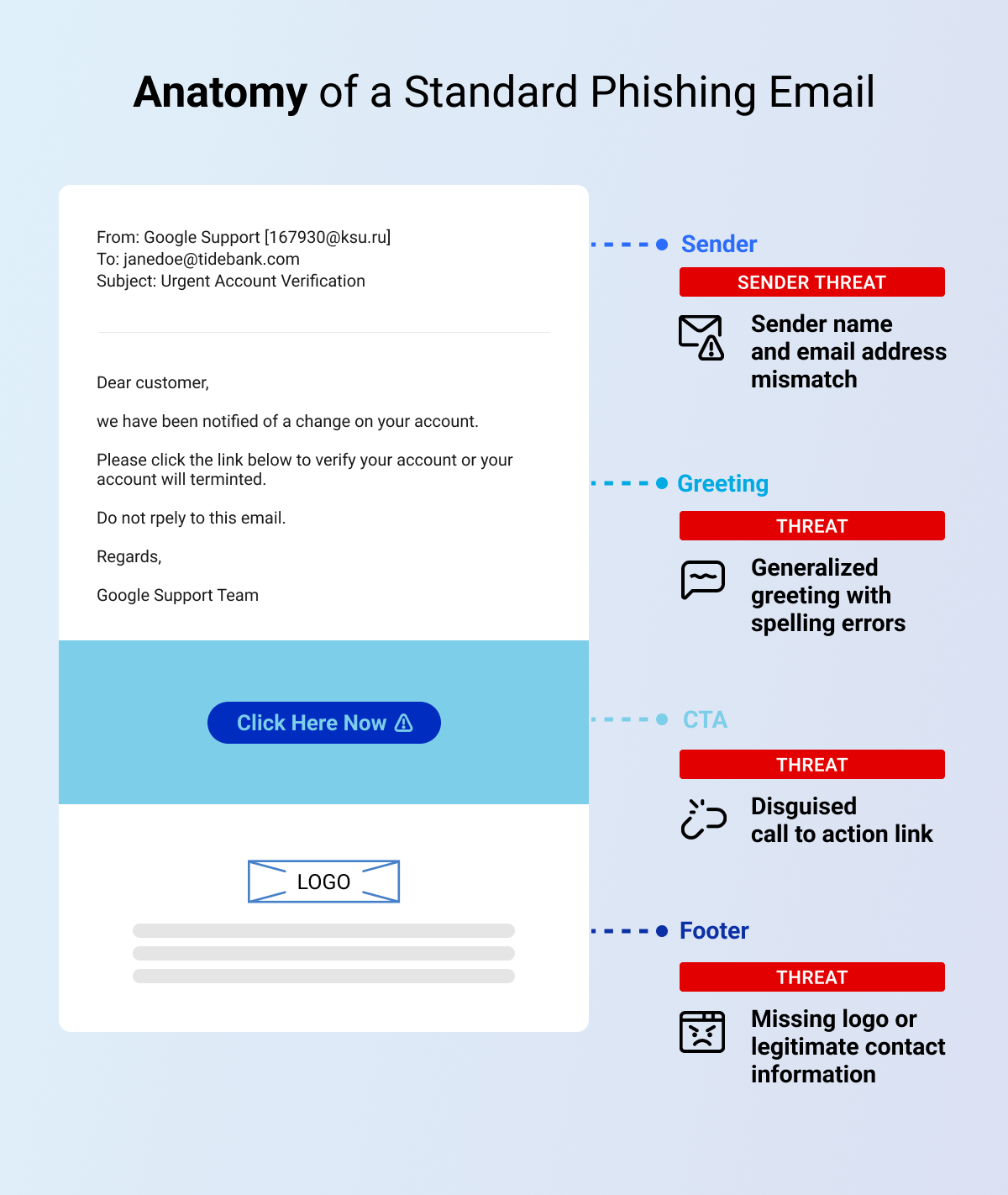
While AI can help generate convincing messages, information shared on social media often makes them more believable. Fraudsters use publicly available details to tailor messages and make urgent requests seem legitimate.
How to Spot a Suspicious Message
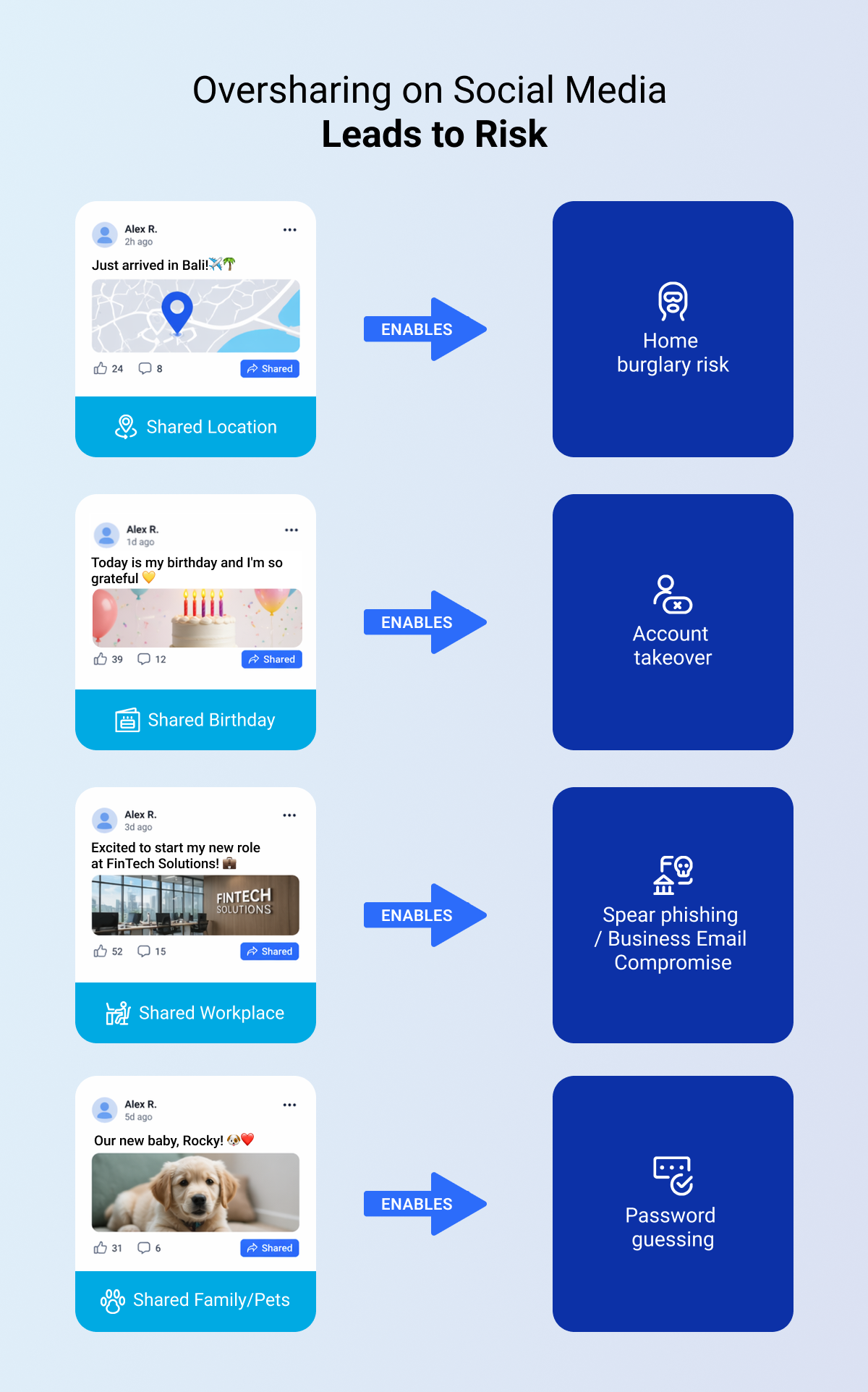
Even the most sophisticated AI scams leave technical "tells." To protect your accounts, look past the professional language and check the message’s infrastructure:
- The Mismatched Sender: An email may say it is from BankUnited, but the actual sender address might be security-update@scam-server.com.
- The Hover Test: Before clicking any link, hover your mouse over it. Does the destination URL match our official secure domain, bankunited.com?
- Logo Imitation: Look for slightly pixelated logos or out-of-date branding that doesn't match our official site.
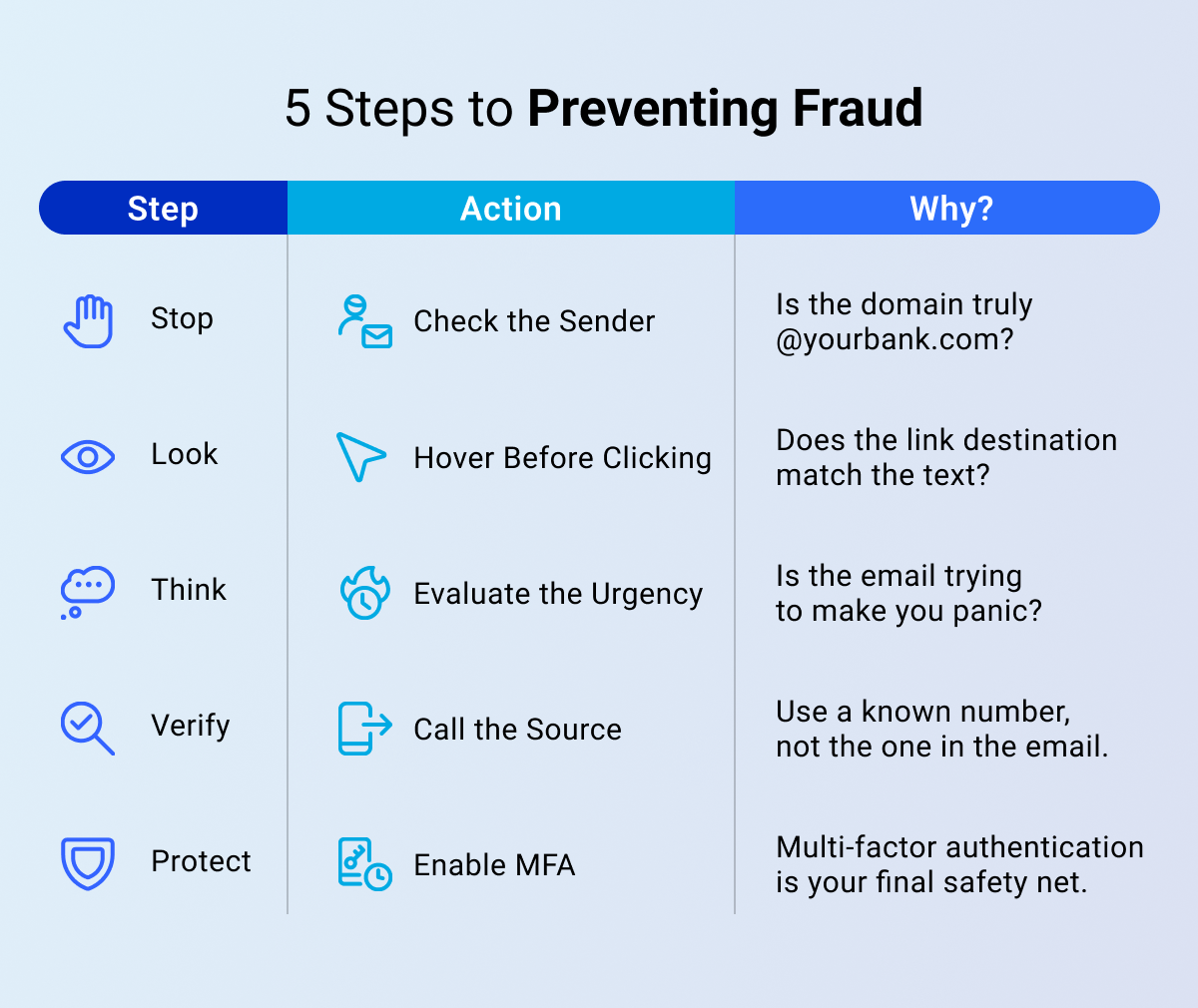
Your 5-Step Shield
We encourage all our clients to adopt these five habits to ensure their banking remains secure:
- Stop. Verify the sender’s actual email address.
- Look. Hover before you click to see the true link destination.
- Think. Be skeptical of any email that demands "immediate action" to avoid account closure.
- Verify. Call our Client Care Center at (877) 779-BANK (2265) if you are ever in doubt.
- Protect. Ensure Multi-Factor Authentication (MFA) is active on all your sensitive accounts.
Our Commitment to You
At BankUnited, protecting our clients’ information and safeguarding their accounts is one of our highest priorities. By staying informed and vigilant, you help safeguard your accounts and our entire banking community.
If you suspect your BankUnited account or credentials have been compromised, please contact your local branch or our Client Care Center immediately at (877) 779-BANK (2265).
Share
 Print
Print
SUGGESTED ARTICLES
All content is for informational purposes only and does not constitute legal, tax, or accounting advice. You should consult your legal and tax or accounting advisors before making any financial decisions. Outcomes may vary based on individual circumstances, financial condition, and market factors. Client stories or testimonials are not a guarantee, promise, or indication of future results.