
Skip To Main Content

FDIC-Insured - Backed by the full faith and credit of the U.S. Government

Business Owners discussing financials

Checking Accounts Built For Business Growth

Choose a small business checking account designed to support your day to day operations and long term goals. Whether you need a simple business checking account or more advanced capabilities, BankUnited offers flexible solutions for your business.
Compare All Accounts

Compare Small Business Checking Accounts

PRIMARY BUSINESS CHECKING

$100

minimum opening deposit

  • $12 monthly maintenance fee - Avoid maintenance fee by maintaining average monthly balance of $1500 or more
  • Up to 150 free transactions (deposits, deposited items, checks & debits) per statement cycle
  • Business VISA® Debit Card
  • Bank on the go with online & mobile banking


BUSINESS EXPRESS CHECKING

$100

minimum opening deposit

  • $20 monthly maintenance fee - Avoid monthly maintenance fee by maintaining average monthly balance of $5000 or more
  • Up to 300 free transactions (deposits, deposited items, checks & debits) per statement cycle
  • Business VISA® Debit Card
  • Bank on the go with online & mobile banking


COMMERCIAL ANALYSIS CHECKING

$100

minimum opening deposit

  • $20 monthly maintenance fee
  • Earnings credit available to help offset monthly maintenance fees and other service charges
  • Detailed analysis statements to help keep track of your business banking (upon request)
  • Business VISA® Debit Card
  • Online treasury management services to manage your company's payments, collections, reporting and account balancing

Business Checking Account Benefits

Regardless of your choice, each of our small business bank accounts is built to deliver value, convenience, and control for your business finances.

white bill pay icon

Online Bill Pay

white debit card

Debit Card

estatement white icon

eStatements

white online banking icon

Online and Mobile Banking

Small Business Checking Accounts FAQs


Get answers to common questions about choosing and managing the best business checking account for your company.

The best business checking account depends on your transaction volume, balance, and banking needs. BankUnited offers multiple small business checking accounts to match different business sizes and activity levels.  

You can open a business checking account by contacting BankUnited or visiting a branch. You will typically need business formation documents, identification, and an opening deposit.  

Fees may include monthly maintenance charges, transaction fees, and cash processing fees. Many fees can be avoided by maintaining required balances.  

Yes, BankUnited provides online and mobile banking tools so you can manage your small business bank account anytime, including payments, transfers, and account monitoring.  

Interested in a Business Checking Account?


Whether you’re starting a new business or looking for a better banking experience, BankUnited is here to help you find the business checking account that fits your needs. Complete the form below and a Business Banking specialist will contact you shortly.

Featured Insights

BankUnited supports small businesses with financial tools, insights, and personalized service to help you succeed. From managing cash flow to planning for growth, we are here to help every step of the way.

The Business Owner's Guide to Cash Flow
May 13, 2024, 15:28 PM
Title : The Business Owner's Guide to Cash Flow
Bank united author : BankUnited
Featured : No
Display order :
Learn why cash flow is the lifeblood of small business, making it vital for small business success.
Paper icon with text

Cash flow is the lifeblood of your business, and recognizing its importance is vital for your success.

Since healthy cash flow helps ensure you have the cash coming in to cover your operating expenses, it makes up a central component of your business’ financial health. The ability to effectively manage your cash flow also puts you on track to reach your longer-term business goals. Strong cash flow means you’re more likely to have the cash on hand to address challenges as they arise.

In this article, we’ll delve deeper into what cash flow is and what it means for your business, what healthy cash flow looks like, and strategies to manage your cash flow to support your goals. 

What is cash flow?

In its simplest form, cash flow is the amount of cash and its equivalents coming in and going out of your business over time. 

Outflows are what’s going out, including your expenses — such as employee salaries and debt payments — and inflows are what’s coming in, including revenue from sales, royalties, or investments.

A business is cash flow positive when the inflows exceed the outflows. Conversely, a business is cash flow negative when the outflows exceed the inflows. 

Why cash flow matters

First and foremost, cash flow tells you about the financial health of your business. 

If businesses don’t know how to manage their cash, they may not know how to manage a shortfall — or they may find themselves in a shortfall without realizing it. 

As a result, business owners without a strong understanding of their business’ cash flow risk relying on debt to remain in operation. They may have difficulty creating budgets without a firm understanding of the cash flowing in and out, and risk running out of the liquidity they may need to achieve their milestones. 

On the other hand, maintaining positive cash flow sets your business up for success. Over time, it helps create a cash buffer to help businesses weather rising costs or economic uncertainty, and enables business owners to re-invest in the company and fuel growth.

Regularly analyzing cash flow can also alert business owners to a change in the business. By identifying a reduction in cash flow early, business owners can investigate the problem and act accordingly — before a cash flow problem undermines the business.

Finally, a firm understanding of the business’ cash flow is often essential to secure business financing. Lenders look at a business’ cash flow statement to assess their creditworthiness — and strong cash flow may signal to lenders that you’re likely to pay them back. As a result, business owners may be more likely to be approved for financing, and may be able to secure financing at a favorable interest rate. 

What does healthy cash flow look like?

The “right” cash flow depends on your goals and the stage of your business. 

Early on, many successful businesses may operate with negative cash flow as they aggressively invest in operations to lay the foundation for future growth. Highly seasonal businesses may find their cash flow ebbs and flows throughout the year, with positive cash flow during peak seasons and negative cash flow during off seasons. 

However, healthy cash flow generally means that the business earns more than it spends — and established businesses should generally operate with a net positive cash flow. 

Factors that contribute to a healthy cash flow include:

Collecting payments on time

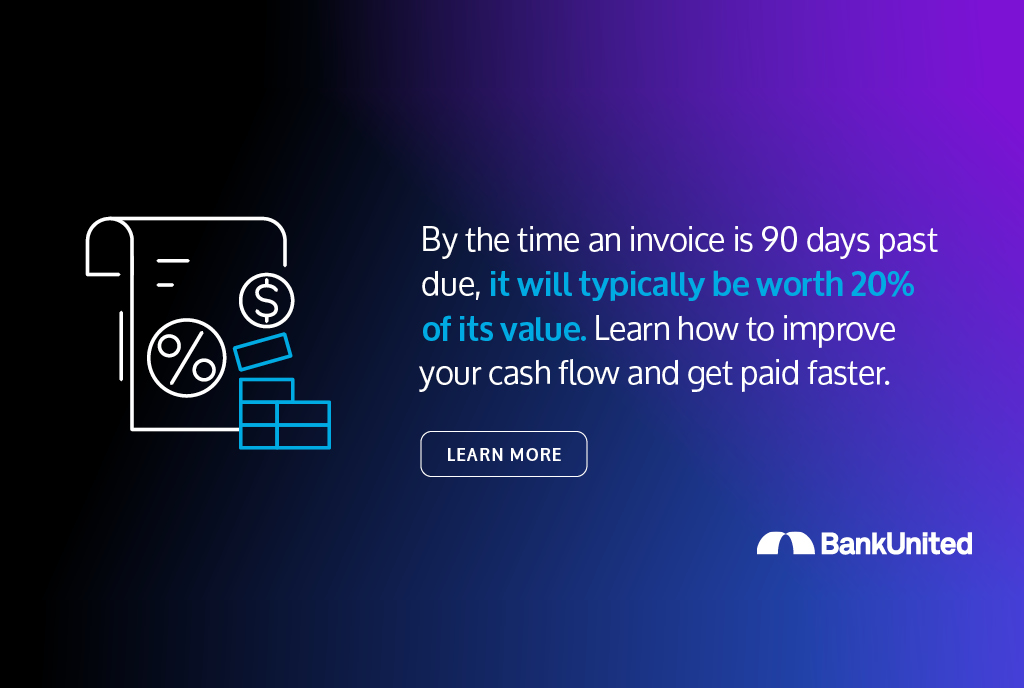
Ideally, all your customers pay on time so you’re not worrying about how to fund your expenses or your next investments. The later a customer pays, the more it contributes to an unstable and potentially unhealthy cash flow because you may need to find other funding sources. It could also mean paying for additional expenses such as overdraft fees or late fees from vendors in the event your business cannot make payments on time.

To improve your cash flow, you want to lower the amount of time you collect money, or the average number of days you collect payments. A common formula to use is DSO (Days Sales Outstanding) or AR (Accounts Receivable) days on hand. 

Business owners can lower their DSO or AR days by encouraging customers to pay earlier. They may negotiate more favorable payment terms — for example, negotiating payment from 45 days to 30 days — impose fees or penalties on customers who pay late, or offer a slight discount for customers who pay upfront or early. 

Having enough cash to pay vendors and expenses on time

Accounts payables, or the amount you need to pay for your expenses, can wreak havoc on your cash flow if you don’t have enough cash on hand. You want your DPO (Days Payable Outstanding) or AP (Accounts Payable) days on hand to be longer than your DSO so that you can ensure you have enough cash by the time your bills are due.

For example, if your DPO averages 45 days and your DSO is 60 days, then you have a shortfall of 15 days. In other words, the business has a 15-day gap between when it has to pay vendors and when the business gets paid.

To improve your cash flow, you want to make sure your DPO is less than your DSO.

You want to be in a position where you collect funds prior to being obligated to pay. For example, you may negotiate terms with clients that allow you to collect payments within 30 days, but negotiate terms with lenders and suppliers that allow you to pay debts or expenses at 45 days.

How to analyze your cash flow

Proactively monitoring your cash flow helps you safeguard your business from potential challenges, and business owners should check in on their cash flow regularly to assess the business’ financial health.

To help you analyze aspects of your cash flow, consider asking the following questions:

  • What are my plans if cash flow is negative?
  • How can I lower DSO? Is it possible to increase DPO?
  • Does my business have more access to funding if needed?
  • Are my cash flow numbers accurate?
  • Is my business earning more than it is spending?
  • How can my business increase profit margins?

To learn more about where your business stands or to help you get answers to these questions, contact us to receive a complimentary comprehensive cash flow analysis. 

topic :
  • Small Business
media :
  • Article
Paper icon with text

Primary Business Checking Account

  • $100 minimum opening deposit
  • $12 monthly maintenance fee:
  • Automatically waived for the first two statement cycles (new accounts only).

    Ways to avoid monthly maintenance fee:

    • Maintain $1,500 average monthly balance in the account or
    • Maintain $4,500 minimum daily balance in related business checking or savings account1
  • First 150 transactions per month at no charge
    • Over 150: $0.40 transaction fee
  • Cash Processing Limits: Deposit/withdraw up to $10,000 in cash per month at no charge
    • $1.50 fee per $1,000 over $10,000
  •  Complimentary Business Visa Debit Card4
  • Complimentary Online & Mobile Banking5


Business Express Checking Account

  • $100 minimum opening deposit
  • $20 monthly maintenance fee:
  • Automatically waived for the first two statement cycles (new accounts only).

    Ways to avoid monthly maintenance fee:

    • Maintain $5,000 average monthly balance in the account or
    • Maintain $10,000 minimum daily balance in related business checking or savings account1
  • First 300 transactions per statement cycle at no charge
    • Over 300: $0.40 transaction fee
  • Cash Processing Limits: Deposit/withdraw up to $15,000 in cash per month at no charge
    • $1.50 fee per $1,000 over $15,000
  • Complimentary Business Visa Debit Card4
  • Complimentary Online & Mobile Banking5


Commercial Analysis Checking Account

  • $100 minimum opening deposit
  • $20 monthly maintenance fee:
  • Earns Credit available to offset fees2

  • Transaction fee applies3
    • Cash Processing Limits: Refer to applicable fee schedule
      • Complimentary Business Visa Debit Card4
      • Online & Mobile Banking: Fees apply to Online Treasury Management Access6


      1. Related account must be in the same name as your Primary Business or Business Express Checking Account.
      2. The monthly maintenance fee may be offset by the earnings credit calculations applied on an analyzed statement at end of month. The earnings credit shall be equal to (i) the average monthly collected balance multiplied by (ii) the then applicable earnings credit rate divided by the actual number of days in the applicable year multiplied by (iii) the actual number of days in the applicable cycle. The earnings credit will be used to offset maintenance fees, transaction fees and any other service charges that may be assessed to the account. If the earnings credit rate exceeds the total monthly fees, such excess will not be carried over or applied to fees incurred in subsequent months. If the earnings credit is less than the total monthly fees, the account may be charged for the amount of the difference. If the earnings credit is negative, the account may be charged the full amount of the fees.
      3. Transaction fees are attained for the following and will be priced accordingly at the time you elect the service.
        • For each check and/or debit paid per statement cycle
        • For each ACH Credit per statement cycle
        • Per deposit credited per statement cycle
        • Per item deposited per statement cycle
      4. You'll get a BankUnited Visa® Business Debit Card with no-fee transactions at BankUnited ATMs. A $2.50 fee will be charged for each transaction performed at a non-proprietary ATM that is not within the Allpoint Network. Fees charged by the ATM owner/operator may also apply.
      5. Requires enrollment.
      6. Pricing provided by our Treasury Management team. Pricing may be different at the time you elect the service. Please contact a Treasury Management Officer for additional information.


      Rates and annual percentage yields (APYs) are effective as of the date indicated and are subject to change without notice unless otherwise stated. Fees may reduce earnings on the account. Products, services, fees, terms and conditions are subject to change. Certain restrictions and limitations may apply. Contact BankUnited for complete account details.

      Please review the see our Deposit Account Agreement, Business Schedule of Fees and Funds Availability Disclosure for complete details.
